Storage for Restaurants in Saudi Arabia: The 2026 Operator’s Guide
Smart Storage for Restaurants is the difference between a kitchen that runs smoothly and one that bleeds money through spoilage, stockouts, and failed inspections. In Saudi Arabia’s fast-growing dining scene, where delivery demand and tourism are both climbing in 2026, how you store ingredients matters as much as how you cook them. This guide breaks down the storage types every restaurant needs, the food-safety rules that govern them, and how to build a supply chain that keeps plates moving and margins healthy.
Whether you run a single cafe in Riyadh or a multi-branch QSR brand across the Kingdom, the principles below will help you protect ingredients, control costs, and stay compliant.
Why Storage for Restaurants Deserves Real Attention
Food is a restaurant’s largest variable cost, and waste eats straight into profit. Poor storage leads to temperature abuse, cross-contamination, and premature spoilage, all of which inflate your food-cost percentage. Good storage does the opposite: it extends shelf life, keeps ingredients at their best, and protects you during a health inspection.
Saudi Arabia’s hospitality sector is expanding rapidly under Vision 2030, with tourism and entertainment driving new venues in Riyadh, Jeddah, and the Red Sea destinations. More covers mean larger orders, longer storage windows, and less room for error. A disciplined storage strategy is no longer optional for serious operators.
The Hidden Cost of Getting It Wrong
- Spoiled produce and proteins written off before service
- Emergency top-up purchases at premium prices
- Failed inspections and reputational damage
- Customer complaints from off-spec or unsafe food
The Four Storage Zones Every Kitchen Needs
Most restaurants rely on a blend of temperature zones. Matching each ingredient to the right zone is the foundation of food safety and freshness.
| Zone | Temperature | Typical Ingredients |
|---|---|---|
| Dry / Ambient | 15°C to 25°C | Rice, flour, oil, canned goods, spices |
| Chilled | 0°C to 5°C | Dairy, fresh produce, sauces, prepared items |
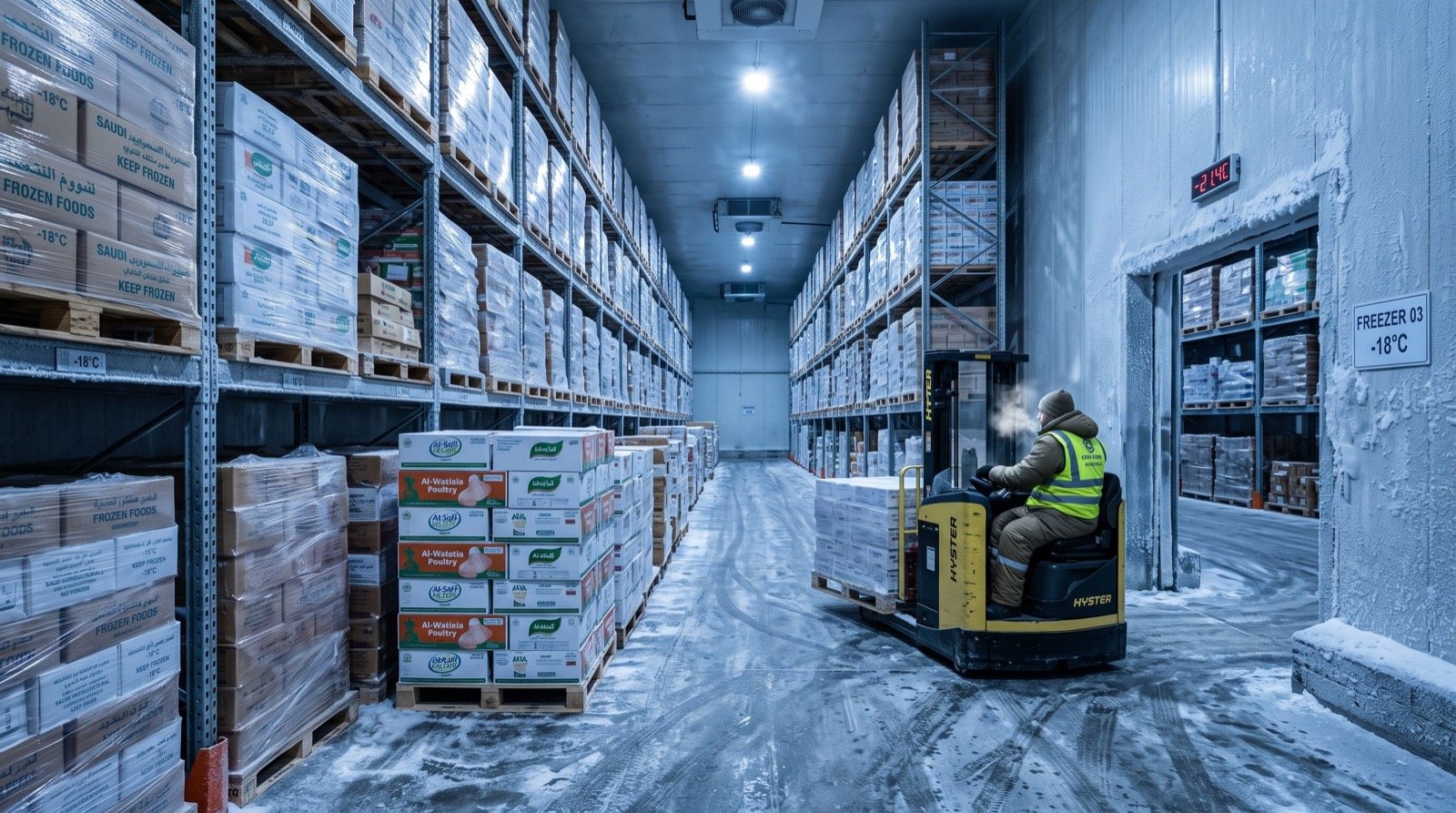
| Frozen | -18°C or below | Meat, poultry, seafood, fries, ice cream |
| Deep Freeze | -24°C or below | Long-hold proteins and bulk reserves |
High-volume operators often outsource bulk holding to a dedicated warehouse partner. Specialist Storage for Restaurants providers offer multi-temperature space, so a single kitchen can keep only a few days of stock on site while a central facility holds the rest safely.
Food Safety and Cold-Chain Compliance
In Saudi Arabia, food businesses must follow the rules set by the Saudi Food and Drug Authority, which cover temperature control, traceability, and hygiene. Internationally recognised HACCP principles, promoted by the Food and Agriculture Organization, underpin these requirements.
Core Cold-Chain Rules
- Keep it cold: Never leave perishables in the danger zone of 5°C to 60°C longer than necessary.
- First In, First Out: Rotate stock so older items are used first.
- Label everything: Record receiving and use-by dates on every container.
- Separate raw and ready: Store raw proteins below ready-to-eat foods to prevent drips.
- Monitor and log: Check and record fridge and freezer temperatures daily.
Should You Store On-Site or Outsource?
Every operator faces this question as volume grows. On-site storage gives instant access but eats valuable kitchen space and limits buying power. Outsourced warehousing unlocks bulk pricing and frees floor space, at the cost of a delivery schedule.
When Outsourcing Makes Sense
- You run multiple branches needing centralised supply
- You buy proteins in bulk to lock in prices
- Your kitchens are small and space is premium
- You need reliable frozen capacity beyond a reach-in freezer
Growing chains frequently pair central dry and chilled holding with dedicated Frozen Storage in Riyadh to secure long-hold proteins and seasonal stock without crowding their kitchens.
How to Choose a Restaurant Storage Partner
The right warehouse partner protects your food and your reputation. Judge candidates on more than price alone.
What to Verify Before You Commit
- Temperature integrity: Continuous monitoring with alarms and backup power.
- Hygiene standards: Documented cleaning schedules and pest control.
- Traceability: Batch-level tracking and clear reporting.
- Delivery reliability: Consistent, on-time dispatch to each branch.
- Flexibility: Capacity that scales with your seasonal demand.
Work with trusted professionals who can show food-safety certification and a solid record with other hospitality clients before you move a single pallet.
A Practical Tip From Service
One habit separates tidy kitchens from chaotic ones: a weekly storage audit. Walk every zone, check temperatures, pull anything near its use-by date to the front, and reconcile stock against your order sheet. Ten focused minutes each week prevents the slow drift that turns a well-stocked walk-in into a graveyard of forgotten boxes. Pair that audit with a simple par-level sheet so each station reorders before, not after, it runs dry.
Planning Storage Around Saudi Demand Peaks
Restaurant demand in the Kingdom is highly seasonal, and storage planning should reflect that rhythm. Ramadan transforms consumption patterns, with iftar and suhoor driving enormous volume in a compressed window. National holidays, school breaks, and major entertainment events in Riyadh and Jeddah all create their own spikes.
Smart operators forecast these peaks and pre-position stock weeks ahead, rather than scrambling when prices climb and suppliers run short. This is where outsourced warehousing proves its worth, giving you the extra frozen and dry capacity to buy early and hold safely.
A Simple Seasonal Checklist
- Review last year’s sales data to predict this year’s peaks.
- Lock in bulk pricing with suppliers before demand surges.
- Reserve additional warehouse capacity ahead of the season.
- Rotate older stock out before new bulk deliveries arrive.
- Confirm delivery schedules so branches never run dry mid-service.
Operators who plan this way protect both their margins and their guest experience during the busiest, most profitable weeks of the year.
Frequently Asked Questions
What is the best storage setup for a small restaurant?
Most small venues need a dry-goods area, a chiller, and a freezer. As volume grows, outsourcing bulk frozen and dry stock to a warehouse partner frees kitchen space and improves buying power.
How often should restaurant fridge temperatures be checked?
Check and log chilled and frozen temperatures at least twice daily, ideally at opening and closing. Automated sensors with alarms add a safety net against overnight failures.
Can outsourced storage really reduce food costs?
Yes. Centralised warehousing lets you buy in bulk at lower prices, cut spoilage through proper cold-chain handling, and reduce emergency top-up purchases, all of which lower your overall food cost.
What temperature must frozen restaurant stock be kept at?
Frozen food should be held at -18°C or colder, with long-hold proteins often stored at -24°C. Consistent temperature prevents freezer burn and preserves quality and safety.
Conclusion
Dependable Storage for Restaurants protects your ingredients, your margins, and your reputation in one move. Match each ingredient to the right temperature zone, follow Saudi food-safety rules, and decide honestly whether on-site or outsourced holding fits your growth. As the Kingdom’s dining scene surges through 2026, operators who treat storage as a strategic asset, not an afterthought, will serve fresher food at lower cost. Audit your zones this week and build the supply chain your menu deserves.